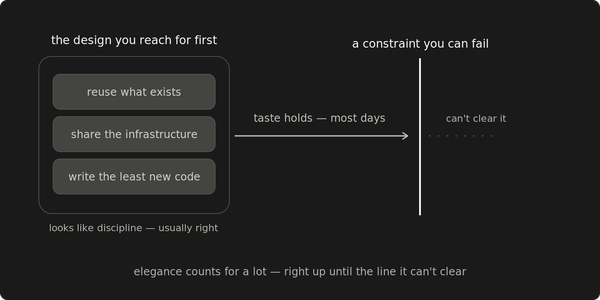
A constraint you can fail overrules your architecture
An architecture can clear every performance spec and still fail a line that has nothing to do with speed: a price ceiling, a margin it quietly destroys.
An architecture can clear every performance spec and still fail a line that has nothing to do with speed: a price ceiling, a margin it quietly destroys.
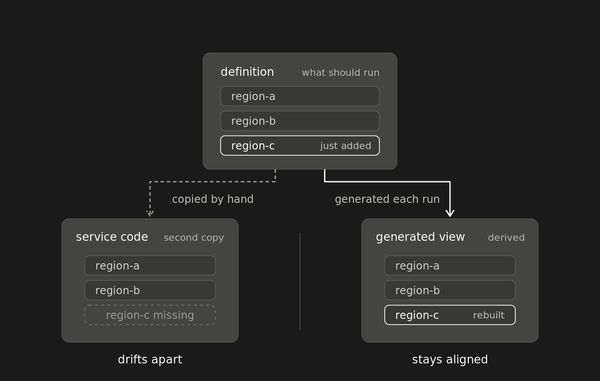
A fact about infrastructure stored in service code is a second source of truth, and two copies drift. Generate the view from the source instead.
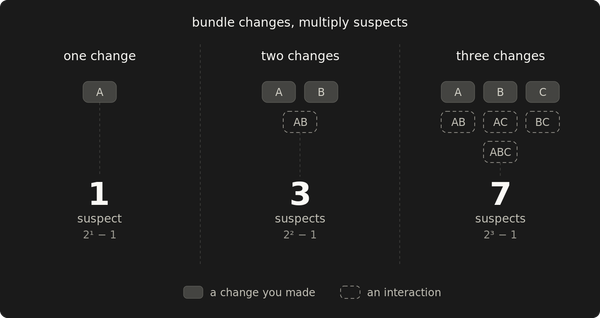
Hold every variable but one and a failure has one suspect. Bundle two and the suspects grow like the subsets: three places to look, then seven.
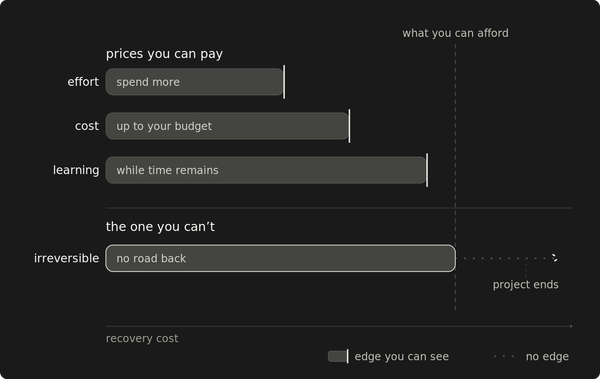
Most risks are prices you can pay. The one with no affordable way back is different. Settle those decisions first, while you still have a choice.
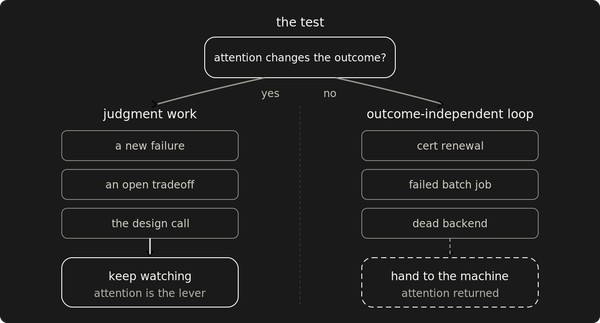
The work you watch out of habit should run without you. Automation's job: make that true and hand back the attention the watching was quietly costing.
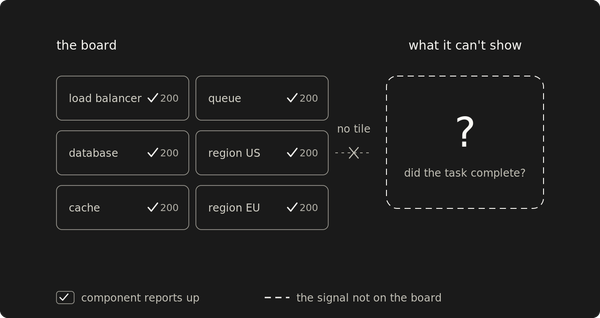
A green board means the components are up. Whether a user can finish the task is a question the system was never built to answer about itself.
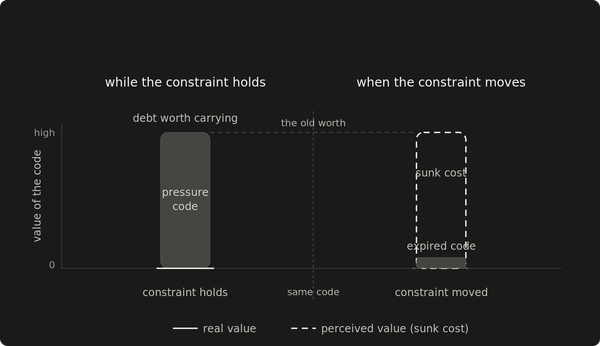
Technical debt is extra future cost accepted for a present capability. When the constraint moves, sunk cost keeps the code alive past its expiry
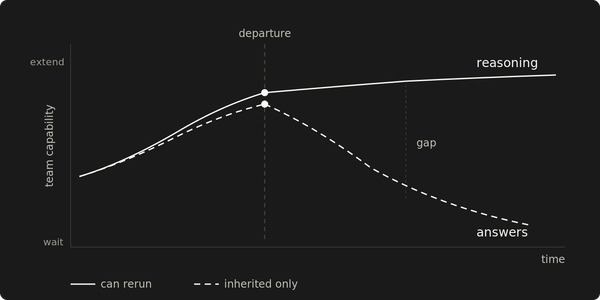
Team capability transfer holds only when the team can rerun the reasoning themselves. What lives only in the engineer's head leaves with them.
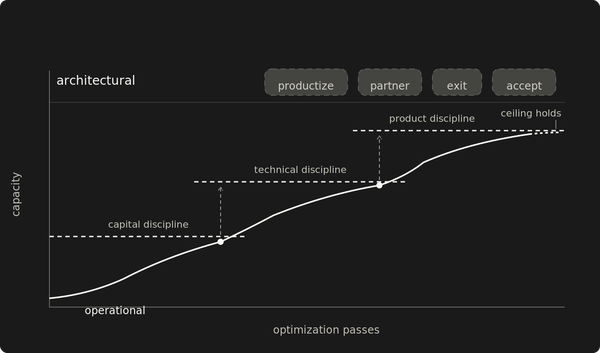
When the business model is the constraint, execution discipline raises the ceiling without breaking it. A diagnostic for model constraints.
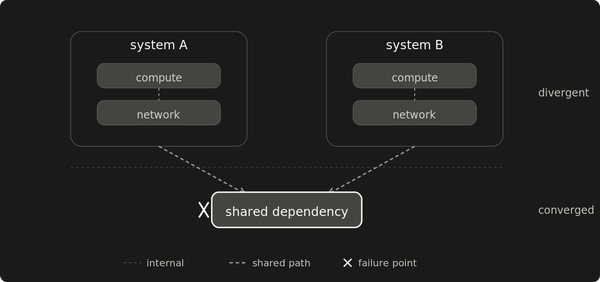
Two backups, two providers, two regions. None of it is redundancy if components share a dependency anyone forgot to map. The failure proves which.
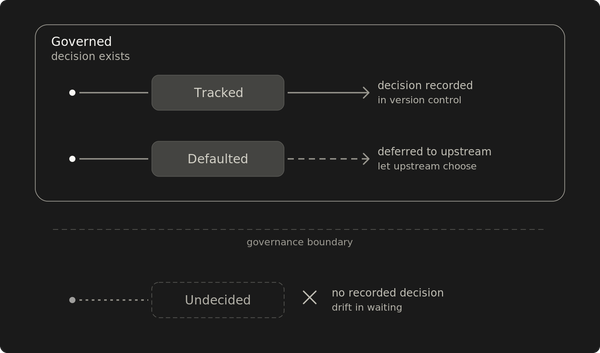
Configuration management asks what each value should be. Governance asks whether anyone decided. Drift accumulates in the gap between the two.
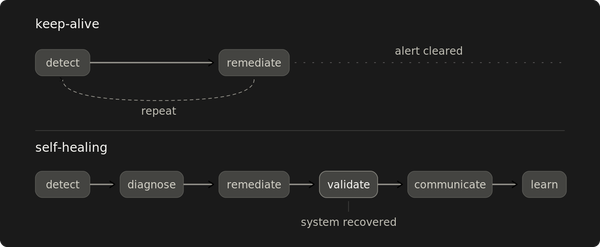
Keep-alive automation checks whether the script ran. Self-healing checks whether the system recovered.